
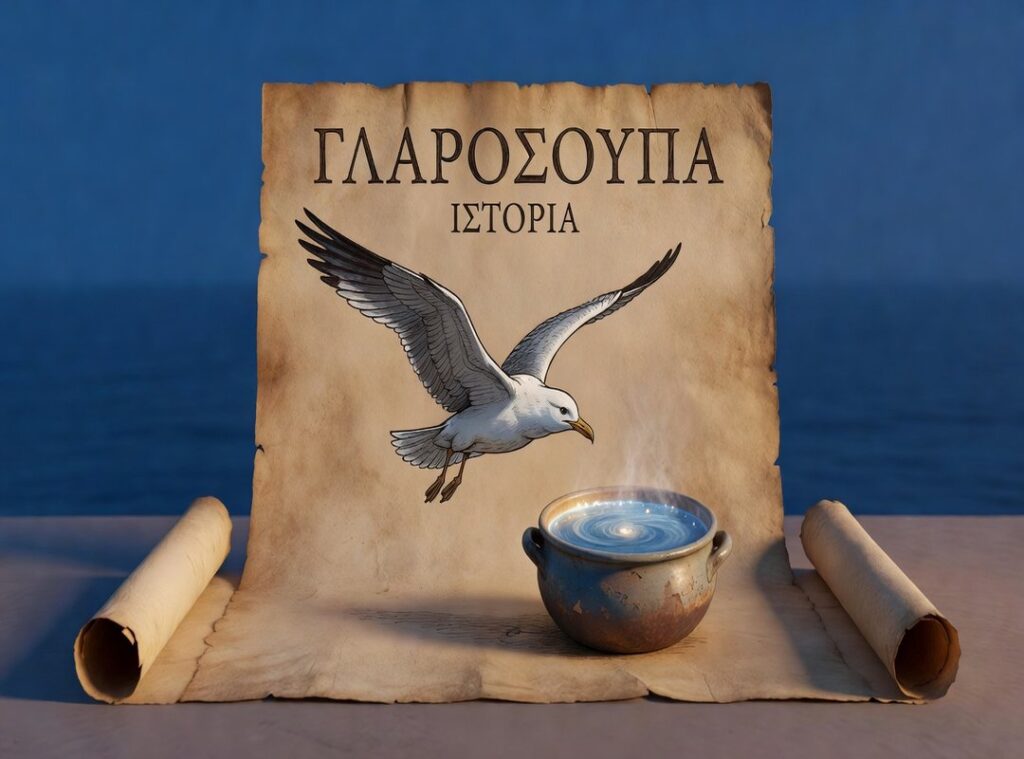
What the hell is Glarosoupa Mple Istoria?
It sounds like a dish. A weird one. Maybe something you’d find on a taverna chalkboard next to grilled octopus and ouzo.
It’s not.
It’s Greek. And it means Seagull Soup Blue History.
Yes. That’s the literal translation.
No one serves seagull soup in Greece. (I checked.)
This phrase is an idiom. A real one. Used by real people.
For decades.
You’re here because you heard it somewhere. Maybe online, maybe from a Greek friend who laughed and refused to explain.
You want to know what it actually means. Where it came from. Why “blue”?
Why “seagull soup”?
I’ve spent years studying how Greeks actually talk (not) textbook Greek, but the messy, living kind. The kind with inside jokes, half-remembered proverbs, and phrases that make zero sense until they click.
This isn’t folklore dressed up as linguistics. It’s the real deal.
We’ll trace where Glarosoupa Mple Istoria first showed up. Who said it. Why it stuck.
And no (we) won’t pretend it’s deep or poetic. Sometimes it’s just absurd. And that’s fine.
You’ll walk away knowing exactly what it means. When to use it. And when to avoid it entirely.
That’s the promise.
What “Glarosoupa Mple Istoria” Really Means
I’ve heard it in cafés. At family dinners. Even in work meetings that should’ve ended ten minutes ago.
Glarosoupa Mple Istoria is not a recipe. It’s a sigh disguised as a phrase.
It means someone’s telling a story that’s too long, too tangled, and way too self-important. You know the kind. The one where they start with the weather and end with why your coffee order is morally suspect.
“Glarosoupa” means seagull soup. Which. Let’s be real (is) nonsense food.
No one makes it. No one wants it. It’s just there to signal this makes no sense.
“Mple Istoria” means blue history. Not sad history. Not deep history. Blue (like) a sky you stare into while waiting for the point.
So together? It’s a joke with teeth. A polite way to say stop talking.
You use it when your cousin explains exactly how his router rebooted three times before he texted you back.
Or when your coworker spends eight minutes describing the parking spot he almost got.
You’re naming the absurdity.
It’s not rude. It’s relief. You’re not shutting them down.
A simple explanation takes thirty seconds.
A Glarosoupa Mple Istoria takes twenty minutes and leaves everyone tired.
Want to hear how it really sounds in Greek conversation? learn more
I don’t use it lightly.
But I’ll use it fast.
The ‘Soup’ Part: Why Seagull Soup?
I call it Glarosoupa Mple Istoria because it’s absurd on purpose.
Seagull soup doesn’t exist (not) really. And Greeks cringe at the idea.
That’s the point.
It’s gross. It’s ridiculous. It’s something you’d never serve, even as a joke.
Which makes it perfect for naming a story that’s tangled, half-baked, or just plain wrong.
You’ve heard “I got into a soup”. Meaning a mess. In Greek, έμπλεξα σε μια σούπα means exactly that.
Not dinner. A problem. A tangle.
A lie dressed up as truth.
So why seagull? Because regular soup isn’t weird enough. Chicken soup is comfort.
Tomato soup is simple. Seagull soup? That’s nonsense with feathers.
It sticks in your head. It makes people pause. It signals: *this isn’t normal.
This isn’t safe.*
Food idioms work because they’re visceral. You taste the failure. You smell the confusion.
A “soup” isn’t just messy (it’s) blended beyond recognition.
That’s what happens when facts get twisted, repeated, and reheated until nothing’s clear.
That’s the Glarosoupa Mple Istoria.
You know that feeling when someone tells a story and you’re already lost by sentence two? Yeah. That’s the soup.
And seagulls? They’re just the cherry on top. (Or maybe the feather in the broth.)
What’s So Blue About “Mple Istoria”?

I call it Glarosoupa Mple Istoria when someone starts a story and I already know I won’t make it to the end.
“Blue” here isn’t about color. It’s about mood. That low hum in your chest when a tale drags on.
(You’ve felt it.)
In Greek, mple can mean “sad” (but) also “long,” “endless,” “unrelenting.” Like rain that won’t stop. Or a relative who tells the same story (twice.)
History already implies length. Detail. Repetition.
Add mple, and it’s not just long. It’s heavy. Exhausting.
You check your phone. You blink slower.
Think of that one friend who opens with “So this guy…” and 12 minutes later you’re still in the parking lot of the story.
It’s not that the facts are wrong. It’s that the telling has no rhythm. No exit.
No breath.
You ask yourself: Is this going somewhere? Or is it just looping?
That’s the blue part. Not sadness exactly. More like fatigue.
Mental drag.
Cultures assign colors to feelings. English says “feeling blue.” Greek says mple istoria. And means “this story will bury me.”
You don’t need symbolism to get it. You just need to have sat through one.
Glarosoupa Mple Istoria: A Mouthful That Means “Stop Talking”
I’ve heard it at my cousin’s wedding. At the taverna. Even from my dad when I tried to explain blockchain over ouzo.
Glarosoupa Mple Istoria is not two separate things. It’s one sour, salty, slightly ridiculous mouthful.
Seagull soup? Gross. Blue history?
Boring as hell. Put them together and you get a story that drags, confuses, and leaves a weird aftertaste.
Greeks don’t say “that’s long-winded.” We say this.
You know that moment when your uncle starts retelling his 1987 ferry delay. Complete with weather reports and passenger names?
That’s Glarosoupa Mple Istoria.
It’s not always polite. Sometimes it’s eye-rolling. Sometimes it’s muttered under breath.
Always it’s understood.
At family dinners, it shuts down tangents. With friends, it’s a nudge. “dude, wrap it up.” In work chats? Yeah, people use it there too.
(Yes, really.)
It works because it’s visual. Because it’s absurd. Because it’s true.
Want to know which version of this chaos fits your table? Which Glarosoupa Game Should I Buy Dmgameolificano
No seagulls were harmed.
But several stories were cut short.
You Get It Now
I told you what Glarosoupa Mple Istoria means.
No more head-scratching over that phrase.
You were confused. It sounded weird. Like nonsense strung together.
But it’s not nonsense. It’s Greek logic. Clear once you break it down.
Soup. Blue. History.
Each word pulls its weight. The culture holds it all together.
Now you hear it and get it.
Not just the translation (the) why.
So next time you catch it in a film or a café? Listen closer. Nod like you’ve known it your whole life.
Try saying it yourself. Not as a joke. Not as a gimmick.
Say it when it fits. Like salt on good food.
Or just sit with it.
Let the weight of the language settle in.
You came here lost. You’re leaving unconfused. That’s the win.
Go use it. Or savor it. Either way.
Say it out loud right now.